You already know you need a scheduling tool. You've probably been juggling three browser tabs, a notes app, and a mental promise to "post it later" that quietly dies every afternoon. The actual problem isn't finding a tool — there are dozens. The problem is figuring out which one won't drain your budget or make you switch again in six months.
I went through the pricing pages, feature lists, and fine print of five options: Buffer, Later, Hootsuite, Sprout Social, and Solnk. No affiliate links here. No "Editor's Choice" badge going to whoever pays the most.
Here's what I found.
The Pricing, Upfront
Before features or platform support, let's deal with money. This is where the biggest surprises hide.
| Tool | Free Plan | Entry Paid Plan | Mid-Tier | High-Tier |
|---|---|---|---|---|
| Buffer | 3 channels, 10 posts/channel | Essentials: $6/channel/mo | Team: $12/channel/mo | — |
| Later | No (14-day trial only) | Starter: $25/mo | Growth: $50/mo | Scale: $110/mo |
| Hootsuite | No | Professional: $149/mo | Team: $249/mo (annual) | Custom (Enterprise) |
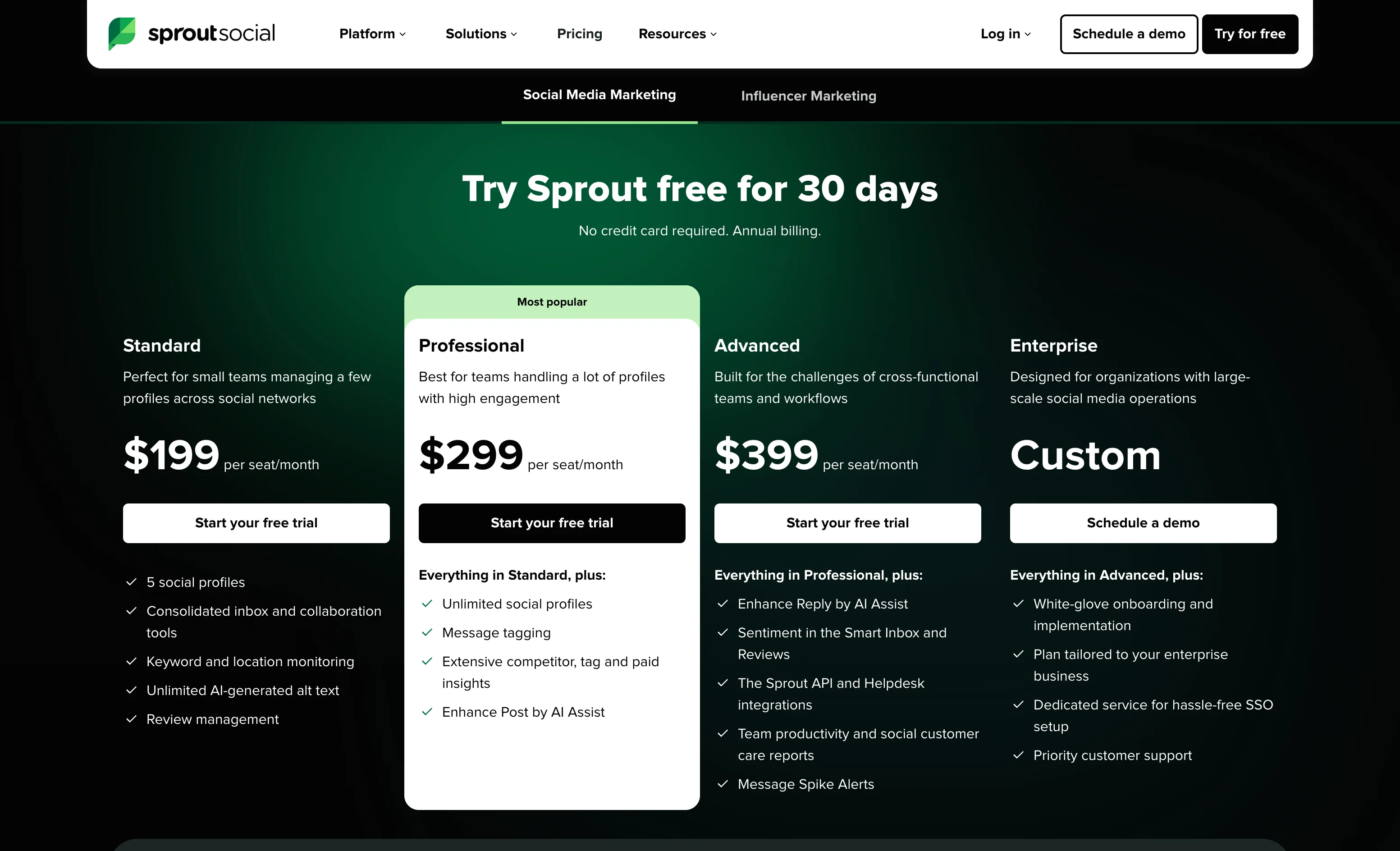
| Sprout Social | No (30-day trial) | Standard: $249/seat/mo | Professional: $299/seat/mo | Advanced: $399/seat/mo |
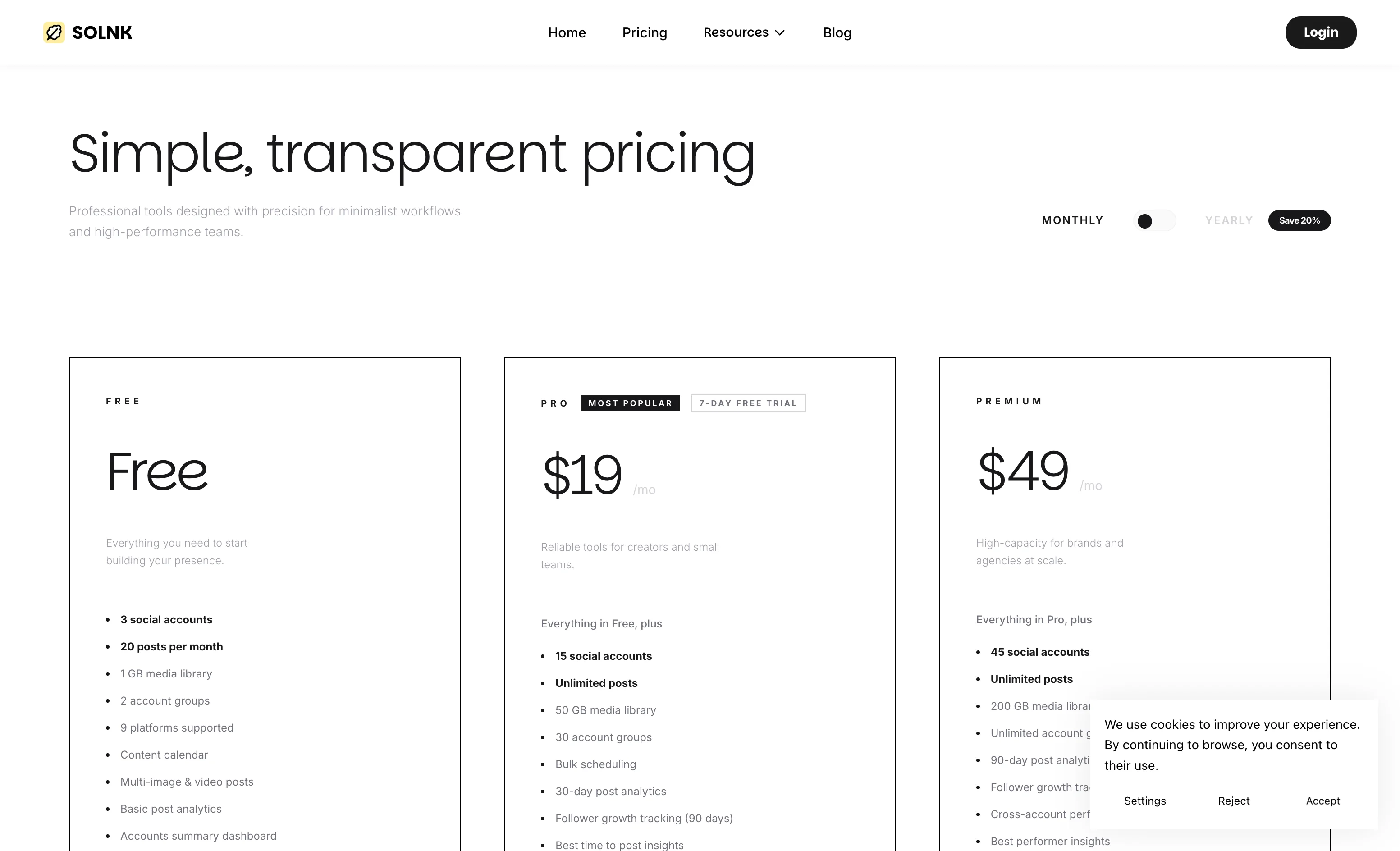
| [Solnk](https://solnk.com/pricing) | 3 accounts, 10 posts/mo, 1GB storage | Pro: $19/mo | Premium: $49/mo | — |
Monthly billing prices as of April 2026. Annual billing saves 15-25% depending on the tool — Buffer drops to $5/channel, Hootsuite to $99/mo, Sprout to $199/seat, Later Starter to ~$18.75/mo.
A few things jump out. Sprout Social costs more per month than some people's car insurance — and that's per seat. Hootsuite killed its free plan years ago and now starts at $149 monthly. Buffer's per-channel model looks cheap until you do multiplication. And Later sits in the middle, neither cheap nor outrageous, but the Starter plan caps you at 30 posts per profile.
Platform Support
Which networks can you actually post to? This matters more than you'd think, especially if you're building an audience on newer platforms like Bluesky or Threads.
| Platform | Buffer | Later | Hootsuite | Sprout Social | Solnk |
|---|---|---|---|---|---|
| ✅ | ✅ | ✅ | ✅ | ✅ | |
| ✅ | ✅ | ✅ | ✅ | ✅ | |
| TikTok | ✅ | ✅ | ✅ | ✅ | ✅ |
| ✅ | ✅ | ✅ | ✅ | ✅ | |
| X (Twitter) | ✅ | ❌ | ✅ | ✅ | ✅ |
| ✅ | ✅ | ✅ | ✅ | ✅ | |
| YouTube | ✅ | ✅ (Shorts) | ✅ | ✅ | ✅ |
| Threads | ✅ | ✅ | ✅ | ✅ | ✅ |
| Bluesky | ✅ | ❌ | ✅ | ✅ | ✅ |
| Mastodon | ✅ | ❌ | ❌ | ❌ | ❌ |
Buffer has the widest coverage — they support basically everything including Mastodon. Solnk covers 9 platforms, matching or beating most competitors on newer networks like Threads and Bluesky. The notable gap: no Mastodon support.
Later is the one that stands out for what it doesn't support — no X, no Bluesky. If either platform matters to your workflow, Later can't be your only tool.
The Tools, One by One
Buffer
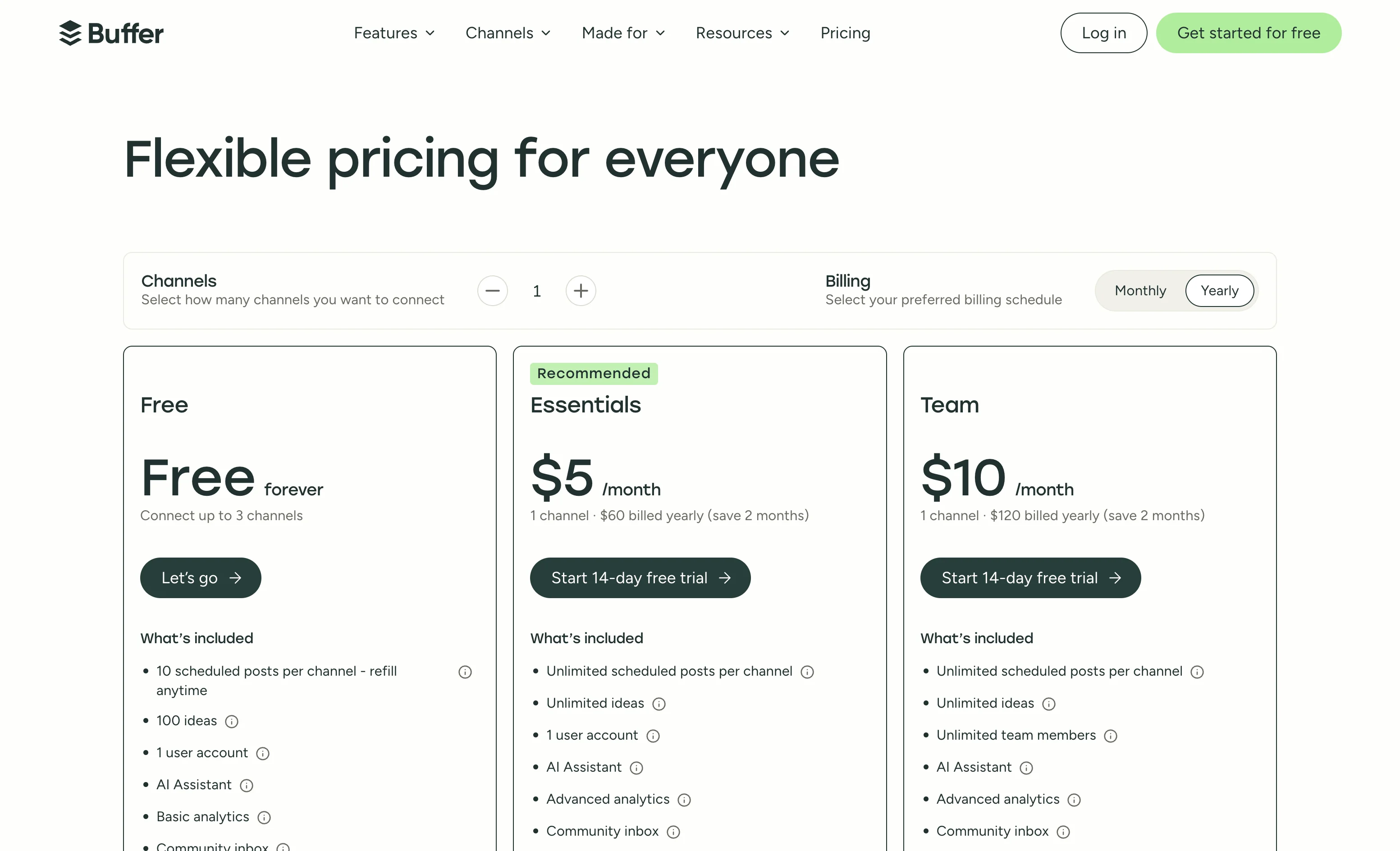
Buffer has been around forever, and simplicity is still its thing. You sign up, connect accounts, start scheduling. No learning curve to speak of.
What works well:
-
Free plan is genuinely usable if you're just starting out
-
Per-channel pricing means you only pay for what you use
-
AI assistant for post ideas, available on all plans including free
-
Widest platform support on this list — they even have Mastodon
Where it falls short:
-
Per-channel pricing scales fast. Six channels on the Team plan is $72/month
-
Analytics are decent, not deep
-
Collaboration tools on the Team plan work but feel basic compared to Hootsuite or Sprout
Works best for: Solo creators and small businesses who want something proven and simple without heavy analytics needs.
Later
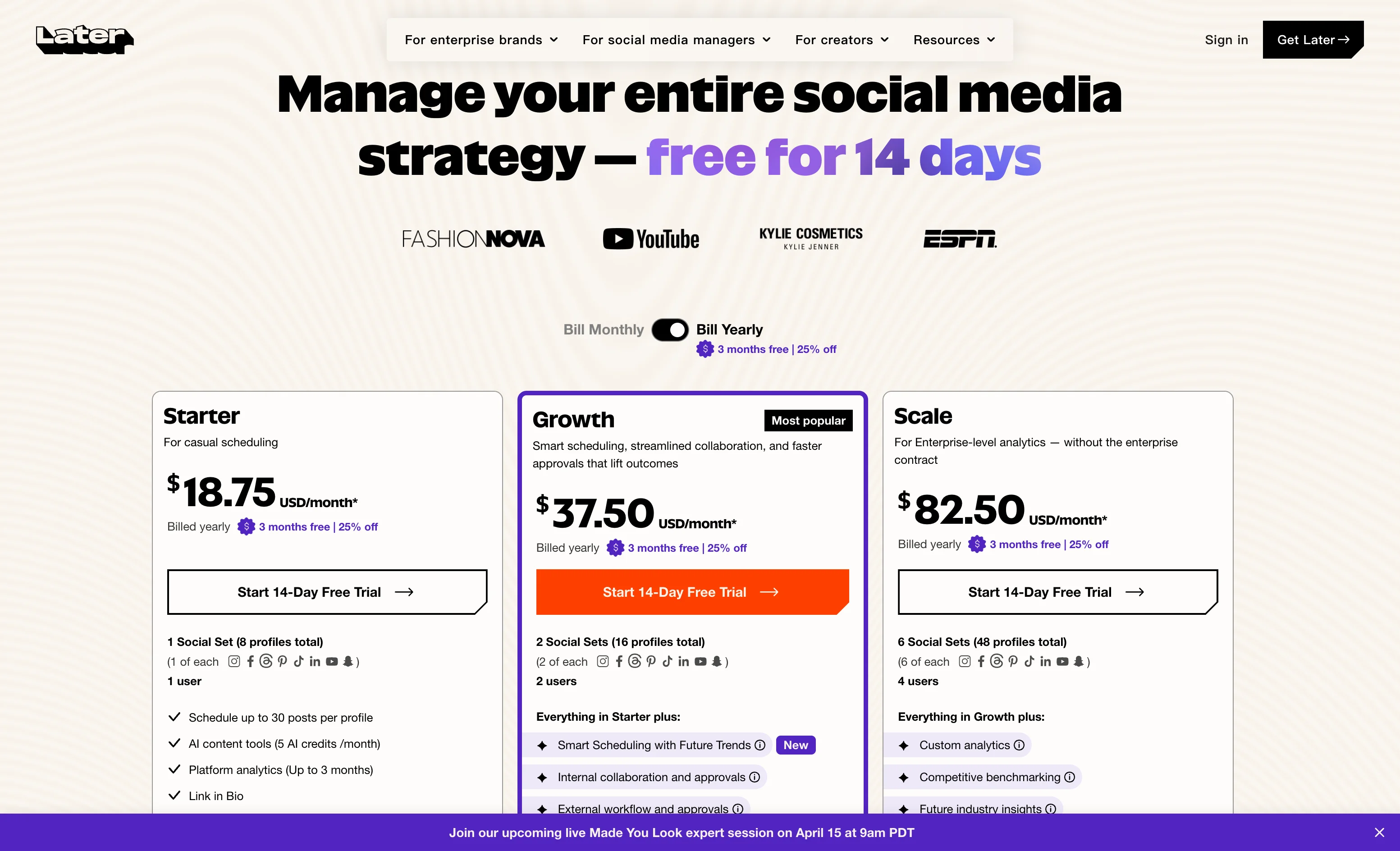
Later started as an Instagram visual planner, and that DNA still shows. If your strategy is Instagram-heavy with lots of grid planning and Reels, Later's interface was built for exactly that.
What works well:
-
Visual content calendar is genuinely good for Instagram workflows
-
Linkin.bio for driving traffic from Instagram profiles
-
Growth plan at $50/mo is reasonable for small teams — 2 social sets, 2 users, 180 posts per profile
-
Smart scheduling suggests posting times based on your audience data
Where it falls short:
-
No free plan — just a 14-day trial, then you're paying
-
Starter plan caps you at 30 posts per profile per month. If you're posting daily across platforms, that's tight
-
No X support. No Bluesky support. That's two growing platforms you can't reach
-
Social listening only on higher tiers
Works best for: Visual-first brands whose strategy centers on Instagram and Pinterest. If X or Bluesky are part of your mix, look elsewhere.
Hootsuite
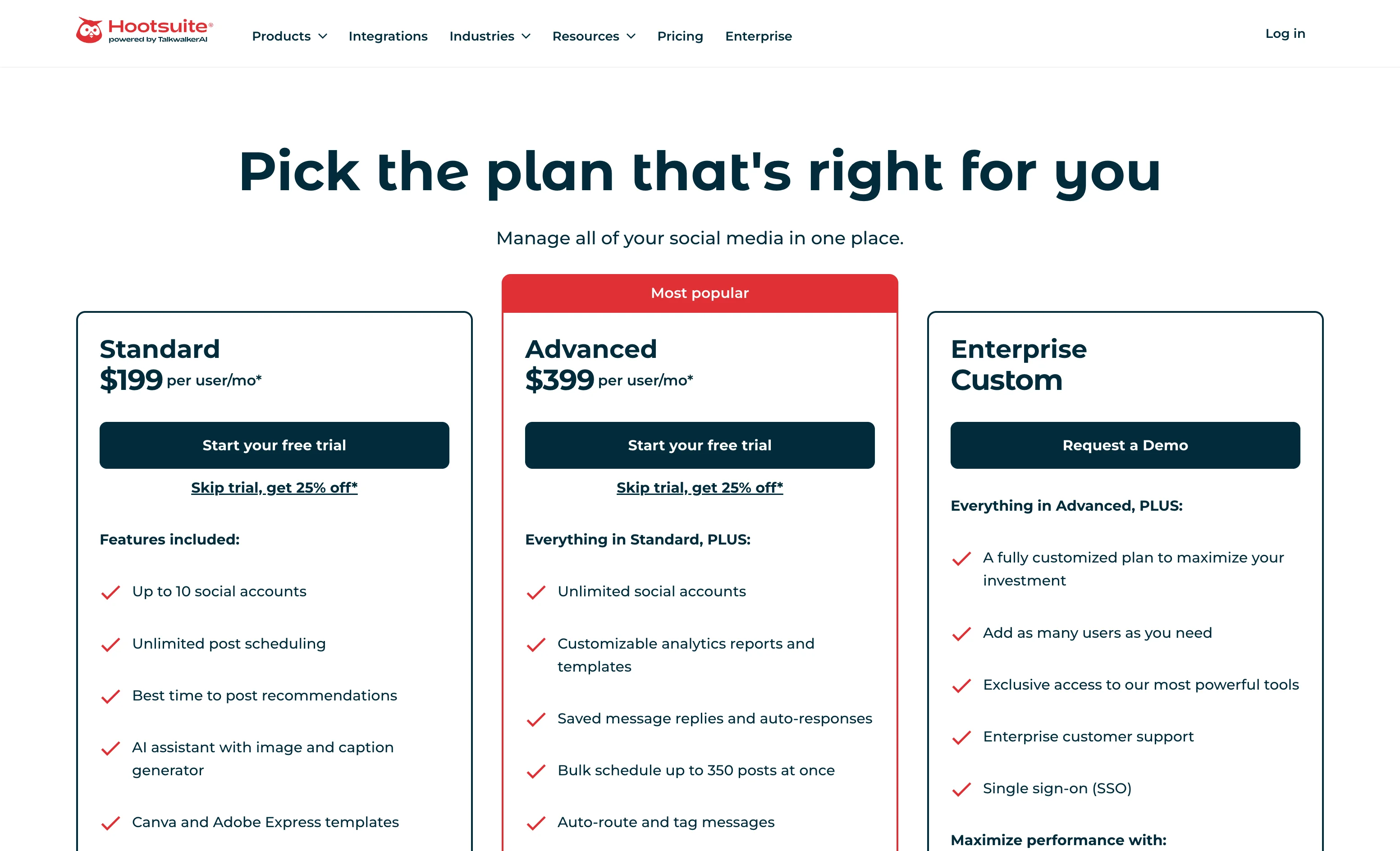
Hootsuite is the enterprise tool that also markets to smaller teams, and the pricing reflects that awkward position. Powerful, yes. But also the tool people most often call overpriced.
What works well:
-
Social inbox for managing DMs and comments across platforms in one place
-
Built-in social listening on higher plans
-
Strong custom reporting and analytics
-
Team collaboration with approval workflows
-
Good platform coverage including Threads and Bluesky
Where it falls short:
-
$149/month as the starting price. Annual billing brings it to $99, but that's still steep for a freelancer
-
Interface has improved but still feels heavier than Buffer or Later
-
They've steadily removed features from lower tiers, pushing people toward pricier plans
Works best for: Mid-to-large teams that genuinely need social listening, a unified inbox, and stakeholder-ready reporting. One person managing three accounts? Overkill.
Sprout Social
Sprout Social is the premium option. Analytics are best-in-class, support is responsive, the product is polished. It's also priced like enterprise software — because that's what it is.
What works well:
-
Most comprehensive analytics of anything on this list
-
Social CRM ties social interactions to customer profiles
-
Employee advocacy tools on higher plans
-
Excellent onboarding and customer support
Where it falls short:
-
$249/seat/month. Per seat. Two people on Standard? $498/month. I'll let that sit for a second
-
The features that actually differentiate Sprout — competitive reports, sentiment analysis — are locked behind the $299+ plans
-
Annual billing drops it to $199/seat, which is still more than most full tool subscriptions
-
Total overkill for anyone who isn't running social for a mid-size brand or agency
Works best for: Agencies and mid-to-large brands with real budgets who need advanced analytics, social CRM, and enterprise reporting. Everyone else: you're paying for capabilities you won't use.
Solnk
Full disclosure — this is our blog. Take this section with the skepticism it deserves. I'll lay out what works and what doesn't, and you decide.
Solnk is a newer tool focused on multi-platform publishing. Flat pricing, no per-channel math, no per-seat surprises on the core plans.
What works well:
-
Flat pricing: $19/mo Pro, $49/mo Premium — you're not doing multiplication to figure out your bill
-
9 platforms supported, including Threads and Bluesky alongside the majors
-
Free tier with 3 social accounts, 10 scheduled posts per month, and 1GB media storage — not just a trial
-
Browser extension for scheduling while you browse
-
First comment auto-posting for hashtag strategies
-
Account grouping for managing multiple niches
-
$19/month for the Pro plan is one of the cheapest "real" paid options in this category
What doesn't — and I'm not going to sugarcoat this:
-
Small user base. Tiny compared to Buffer or Hootsuite. That means fewer community resources, fewer third-party integrations, less of a track record
-
No mobile app. If you do a lot of scheduling from your phone, that's a problem
-
Analytics exist but aren't as mature as what Buffer, Later, or especially Sprout Social offer
-
No social listening. No social inbox. No CRM. If those are core to your workflow, Solnk isn't the right fit
-
Features are still being built out — the product is iterating fast, which is exciting if you like early-stage tools and frustrating if you want everything polished on day one
Works best for: Creators and small businesses who post across many platforms, want straightforward pricing, and value newer platform support. Not the right pick if you need advanced analytics, social listening, or a mobile app.
What 6 Accounts Actually Costs You Per Year
Pricing tables are abstract. Here's what a solo creator managing 6 social media accounts would actually pay:
| Tool | Plan | Monthly | Annual |
|---|---|---|---|
| Solnk | Pro | $19 | $180 |
| Buffer | Essentials | $36 ($6 × 6) | $300 (annual: $5 × 6 × 12) |
| Later | Starter | $25 (1 social set, limited) | $225 (annual billing) |
| Later | Growth | $50 (2 social sets, 2 users) | $450 (annual billing) |
| Solnk | Premium | $49 | $468 |
| Buffer | Team | $72 ($12 × 6) | $600 (annual: $10 × 6 × 12) |
| Hootsuite | Professional | $149 (10 accounts, 1 user) | $1,188 (annual: $99 × 12) |
| Sprout Social | Standard | $249 (5 profiles, 1 user) | $2,388 (annual: $199 × 12) |
Sorted by annual cost because that's what your bank account actually feels.
The spread between Solnk Pro ($180/year) and Sprout Social Standard ($2,388/year) is over $2,200. Whether that gap matters depends on whether you actually use what Sprout offers. If you need enterprise analytics and social CRM, Sprout earns its price. If you just need to get posts out the door across multiple platforms, you're paying for capabilities that sit unused.
Buffer's per-channel model deserves a closer look too. At 6 channels on Essentials, you're at $36/month — reasonable. But agencies managing 15-20 channels? That math gets uncomfortable fast.
Feature Comparison
| Feature | Buffer | Later | Hootsuite | Sprout Social | Solnk |
|---|---|---|---|---|---|
| Post scheduling | ✅ | ✅ | ✅ | ✅ | ✅ |
| Visual calendar | ✅ | ✅ (strongest) | ✅ | ✅ | ✅ |
| Analytics | Basic | Good | Advanced | Best-in-class | Basic |
| Social inbox | ❌ | Limited | ✅ | ✅ | ❌ |
| Social listening | ❌ | Limited | ✅ (paid add-on) | ✅ (higher tiers) | ❌ |
| AI content assist | ✅ | ✅ | ✅ | ✅ | ❌ |
| Team collaboration | Basic | Basic | Advanced | Advanced | ❌ |
| Approval workflows | ✅ (Team) | ❌ | ✅ | ✅ | ❌ |
| Browser extension | ✅ | ❌ | ✅ | ❌ | ✅ |
| Bulk scheduling | ✅ | ✅ | ✅ | ✅ | ✅ |
| First comment posting | ❌ | ✅ | ✅ | ✅ | ✅ |
| Mobile app | ✅ | ✅ | ✅ | ✅ | ❌ |
The pattern is clear: Buffer and Later nail the basics for individuals. Hootsuite and Sprout Social add layers for teams and enterprises. Solnk covers the publishing fundamentals at a lower price point but doesn't have the collaboration, inbox, or listening features that bigger operations need.
So Which One Fits?
There's no "best" tool here. There's only what matches your actual situation.
You post to 2-3 platforms and want zero friction.
Buffer's free plan or Essentials. Proven, simple, hard to mess up.
Your world is Instagram and Pinterest.
Later. The visual calendar and Linkin.bio were purpose-built for this.
You run social for a brand with stakeholders who want reports.
Sprout Social if budget allows. Hootsuite if you want something capable but less expensive, especially with the social listening add-on.
You're active across many platforms including Threads and Bluesky, and want flat pricing.
Solnk. The 9-platform coverage with straightforward pricing is a genuine differentiator. Just go in with open eyes about what's still being built.
Your team has 3+ people who need approval flows.
Hootsuite or Sprout Social. The others aren't built for multi-person workflows yet.
The scheduling tool market keeps shifting. Prices trend upward, platforms add and drop API access, and new tools keep appearing. Whatever you pick today, check whether it still fits in a year.
The unsexy advice that actually works: pick the tool that covers the platforms you use, doesn't blow your budget, and doesn't make you dread opening it. That last part — whether you'll actually use it — matters more than any feature comparison table.